Research Brief
Housing
August 2026

Apartments Benefiting From Stronger
Summer Leasing, Rising Ownership Costs
For-sale market lags. The resale landscape remained relatively strong in June, with sales up 3.3 percent annually compared with a 5.6 percent drop for new homes. Still, the median price for existing homes rose just 1.8 percent, well below the 5.5 percent historical mean. At the same time, the personal saving rate fell to 2.7 percent, less than half the trailing 10-year average. While total household savings have risen this year, the decline in the personal rate underscores inflationary pressure, potentially slowing the pace at which prospective buyers can save for a down payment. As a result, more households may stay in the renter pool longer or forgo saving for ownership altogether.
Affordability gap widens. The 10-year Treasury rate trended higher in July amid renewed conflict in the Middle East, increasing residential mortgage rates. That rise in financing costs widened the affordability gap for the first time since its early 2025 peak, nearly six times its pre-pandemic level. While a narrowing gap would gradually improve homeownership accessibility, the reversal suggests affordability pressures remain entrenched, likely supporting longer renter tenure.
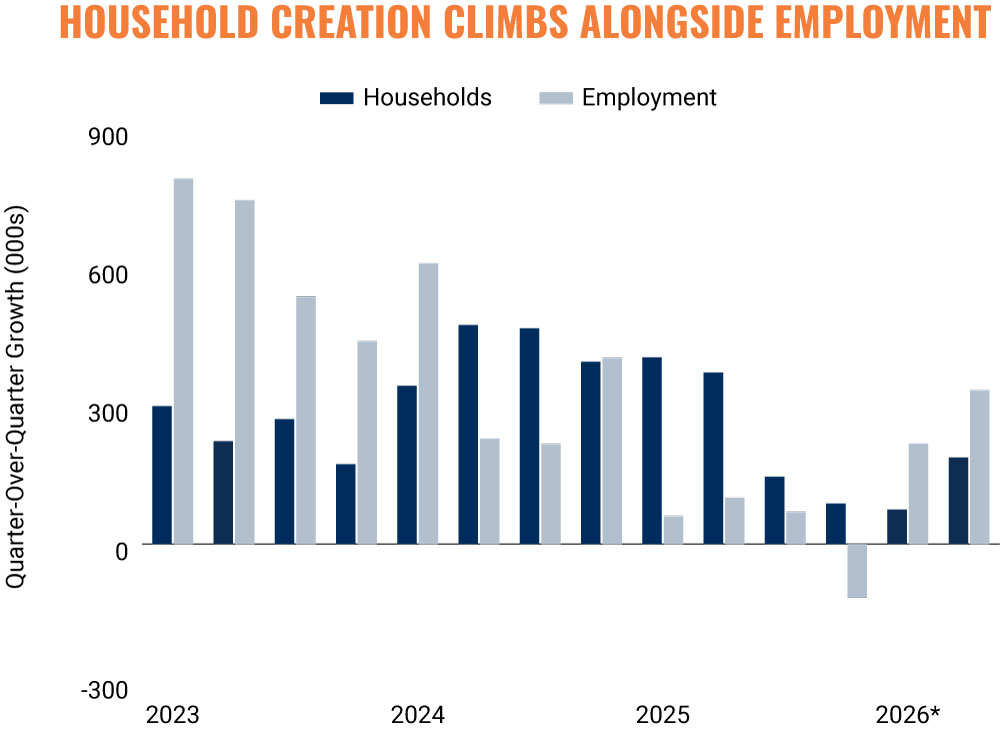
- Apartment demand accelerated in the second quarter as improving hiring fueled household formation, contributing to a 60-basis-point decline in national vacancy.
- Both supply-constrained Midwest and Northeast metros and many construction-heavy Sun Belt markets noted vacancy compression.
- A low personal saving rate and rising mortgage rates underscore the financial leap from renting to owning. The affordability gap widened for the first time since early 2025, supporting apartment retention.
- If apartment demand keeps improving at the second-quarter pace, vacancy should tighten further this year, especially with subdued residential construction.
552,000 |
6.58% |
|
Jobs Added Year-to-Date Through June |
30-Year Mortgage Rate as |
* Through 2Q
Sources: Marcus & Millichap Research Services; Moody’s Analytics; National Association of
Realtors; RealPage, Inc.; Freddie Mac; Mortgage Bankers Association; National Association of
Home Builders; U.S. Census Bureau; U.S. Bureau of Economic Analysis
TO READ THE FULL ARTICLE