
Research Brief

Inflation

July 2026

Economy

Softer Inflation Supports Rate Stability for Investors, but Rising Oil Adds Risk
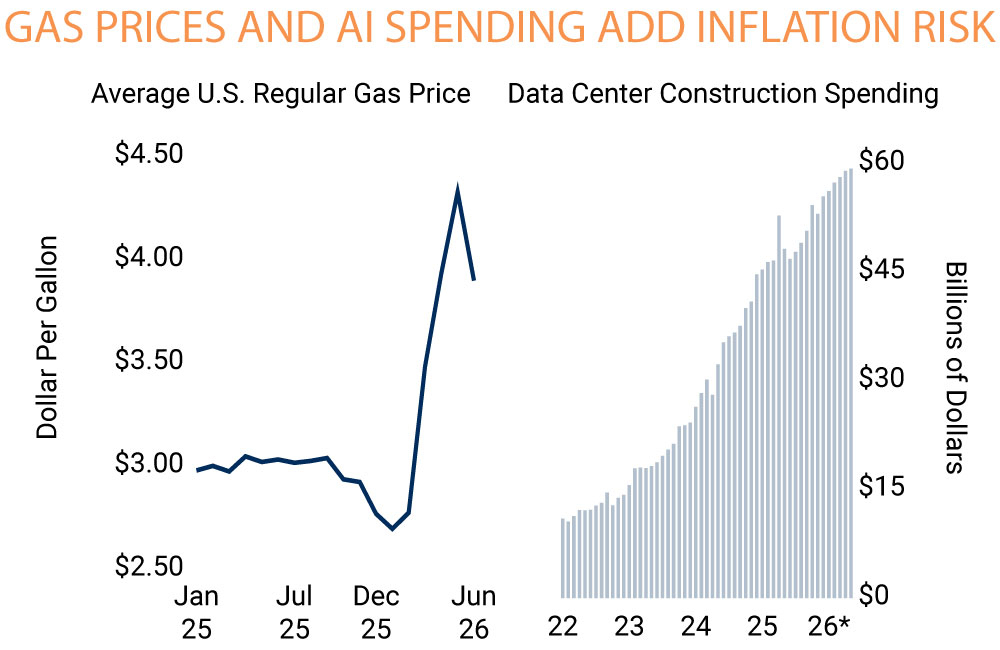
Renewed oil shock threatens inflation progress. June inflation slowed as lower gas prices reduced the headline rate 0.4 percent on the month, while core prices were unchanged. Yet renewed fighting with Iran has lifted oil prices and could reverse that decline. While the nearly 6 percent increase in core retail sales year-overyear in June highlights the resilience of consumers overall, retailers in very competitive industries and catering to lower income households may not fully pass on higher costs. Renewed fuel-cost pressure and fading tax-refund support could prompt younger and lower-income households to cut back on discretionary spending and trade down. Meanwhile, affluent areas with older residents may see steadier retail demand. More renters living with roommates might also boost demand for larger units, while higher commuting costs may lift the appeal of apartments near major job centers. 
 
Tariff refunds aid distributors and retailers. Core goods prices fell by 0.1 percent in June for a second straight month, underscoring negligible tariff pass-through. The temporary 10 percent surcharge under Section 122 expires July 24, but proposed Section 301 duties could replace it soon afterward, leaving the tariff burden broadly similar. Meanwhile, about $71 billion in invalidated tariffs was refunded during May and June, with roughly $166 billion potentially eligible. These payments may support further goods disinflation if importers pass on savings, while boosting hiring or investment among distributors and manufacturers. Smaller retailers may also benefit from lower wholesale prices, while large retailers that import directly could gain the most by using refunds to cut prices and expand market share. Walmart’s recent price reductions across thousands of products may partly reflect that advantage.

 
Employment Chart

AI spending tightens industrial supply while rates hold steady. The AI buildout may add to inflation as firms compete for electricity, computer equipment, construction labor, and materials, though productivity gains should be disinflationary over time. Computer and accessory prices rose 2.3 percent in June and 17.4 percent annually as firms such as Apple raised prices. Meanwhile, elevated interest rates may not slow AI investment because major tech firms hold ample cash. Monetary tightening also has a limited effect on supply-driven inflation and would instead weigh most on younger and less-affluent consumers. Nevertheless, June’s cooler CPI report makes a near-term rate hike unlikely. Holding rates steady may offer CRE investors the best outcome by reducing financing uncertainty without signaling weaker job growth. Existing industrial buildings may also benefit as data center growth competes for land and labor, further slowing conventional construction.

Key Takeaways

  • Headline CPI declined in June, and core prices remained contained, but renewed oil price pressures could stall some of that momentum going forward
  • How much higher fuel and related costs are passed on to consumers will depend on industry competitiveness and income security of the target demographic.
  • Tariff refunds could sustain goods disinflation while supporting hiring, investment, and liquidity among import-heavy distributors and manufacturers.
  • AI investment is adding inflation pressure that the Fed may struggle to contain, though recent CPI softness should keep rates steady and reinforce CRE deal flow.  

3.5%

2.6%

Increase in Headline
CPI Year-Over-Year

Increase in Core
CPI Year-Over-Year


* Through May Sources: Marcus & Millichap Research Services; Bureau of Labor Statistics; Federal Reserve

TO READ THE FULL ARTICLE

MM Texture Background